



With the continuous development of 3D printing technology, more and more industrial application innovations are beginning to incorporate 3D printing. The emergence and optimization of new materials provide fresh ideas and possibilities for the design, production, and upgrading of various industrial products, significantly accelerating the pace of new product development.
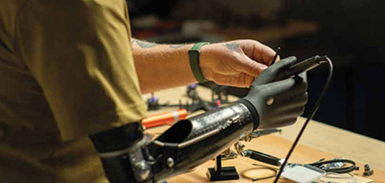
First, 3D printing technology makes personalized customization of industrial products possible. Traditional industrial product manufacturing primarily relies on mold production, often resulting in products with similar appearances and structures. Through 3D printing technology, industrial components and products that meet personalized needs, ergonomic requirements, or special performance criteria can be custom-produced based on different user demands, working conditions, and application scenarios. Customers can choose different materials, colors, and design solutions according to actual needs, enhancing product adaptability and user experience.

Second, 3D printing technology can accelerate the design and product upgrade process for industrial products. Traditional industrial product design and production require significant time and cost, whereas 3D printing technology greatly simplifies the production process, saving both time and money. Designers can use 3D printing to create prototypes, quickly validate design concepts, reduce trial-and-error attempts, and improve R&D efficiency. Additionally, 3D printing can directly convert design drawings into physical products, eliminating the time and expense of mold manufacturing and greatly speeding up time-to-market for new products.
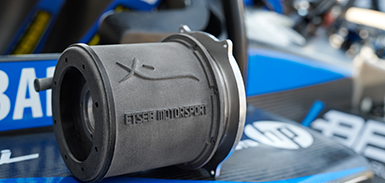
Furthermore, 3D printing technology enables lightweighting and structural optimization design for industrial products. Traditional industrial products, due to metal structures or large plastic parts, tend to be heavy, increasing overall equipment weight and affecting energy consumption and performance. Through the application of new 3D printing materials, specific requirements for strength and lightweighting can be met, with precise control over mechanical distribution and structure, allowing for the design of lighter, stronger, and safer product structures. This effectively reduces overall equipment weight, ensures safety and reliability, and enhances product performance.
In summary, the widespread application of 3D printing is driving the industrial manufacturing sector toward a more intelligent, personalized, and efficient direction. In the future, as materials and technologies continue to evolve and improve, 3D printing will continue to bring more innovation and breakthroughs to the upgrading and development of various industrial products, offering customers across industries more efficient, reliable, and flexible production solutions.
- NEWS / In the News
- Related Recommended News
-
2026-06-03
-

2026-06-03
-

2026-06-03
-
2026-06-03